



HD Voice Resources
Learn more about HD Voice with these educational resources.
We Ship Internationally
¡Hablamos Español!
Enterprises and service providers are in the initial stages of adopting wideband speech coding technology as a means of achieving a 'better than PSTN quality' experience in High Definition Voice communication systems.
In traditional PSTN Telephony, all telephony communications were based on the history bandwidth limitation of the PSTN of 200-3400 Hz and a sample rate of 8Khz. Voice Over Packet networks now allows to use a wider speech bandwidth that offer higher voice quality than the PSTN creating an amazing face-to-face live experience. Current Wideband coders can use almost twice the PSTN bandwidth (150hz to 7000Hz) with a double sample rate of 16Khz.
Pairs of letters like “P” and “T”, “F” and “S” and “M” and “N” sound very similar as their critical energy is carried predominantly in the higher frequencies beyond the PSTN bandwidth. Words like Goal, Bold, Gold are heard the same but have very different meaning.
High Definition Voice increased the call intelligibility, enhance user experience and improve the productivity (applications like call centers, conferences, etc.)
The potential of better than PSTN quality comes from usage of wideband speech processing. While PSTN network is band-limited to 300-3300Hz, there is no such limitation in the IP network so that calls between VoIP Phones or wideband end points can utilize wideband speech coders such as AMR-WB, G.722 , EVRC-WB and additional wideband coders.When using wideband speech at the range of 50-7000Hz, the users can benefit from a more natural sound and increased intelligibility. These factors are very appealing to service providers because they tend to increase the average conversation length.
These vocoders that operate at the frequency range of 50-7000Hz (as shown in Figure 2) where the common technique that is utilized in many wideband coders is to split this frequency range into 2 bands using a QMF Filter-bank and to encode each band separately. Most of the bits are allocated to the lower band, which is still the most important perceptually, while the remaining bits are allocated to the higher band. As can be seen from the figure below, the quality of uncompressed wideband speech is significantly higher than narrow band speech, the difference being more than a full MOS score. The difference between a modern wideband coder such as G.729.1 at 32 kbps and a traditional Narrowband VoIP coder such as G.729A at 8 kbps is even bigger.
High definition voice is expected to be a major factor of improving the business efficiency of today global business environment; In today business globalization outsourcing tasks to foreign counties who are not native speakers (like Call centers, R&D and helpdesk) require improvement of voice fidelity which is more important as the pronunciation and grammar is very different between foreign employees. This is even more important in conferencing applications. Many of the people that use conference bridges are familiar with the problems associated with bad voice quality. The efficiency of a conference call can be greatly reduced even if one participant experiences voice quality problems. The call could stopped in the middle making sure all understand each other, or worse, two people understand something else (which can be very problematic if a pricing of a product is not clear, a travel agency book a ticket to the wrong name, or an address is not clear in an emergency call to a police station..)
HD voice can bring big improvement in business productivity. With today’s rising energy costs, travel often becomes a major component of the business expense. By cutting down the need to travel, even in small percentage, businesses can have dramatic cost savings. HD voice technology can help bringing people closer, making business conversations more fluent and productive, and sometime eliminate the need to travel for having a face to face work meeting.
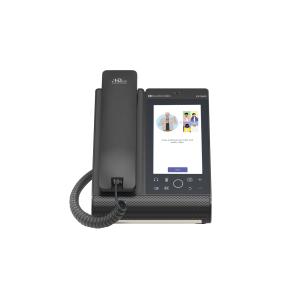
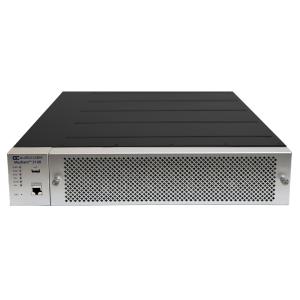
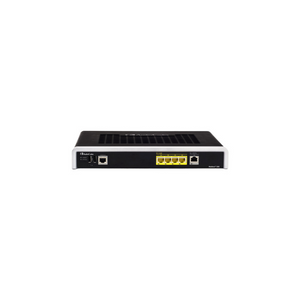
AudioCodes HD VoIP offers a broad range of feature-rich and scalable products including IP Phones, Multi-Service Business Gateways, and Media Servers that support HD VoIP quality utilizing the most popular wideband coders such as G.722, G.722.2, G.729.1, EVRC-B, G.711-WBE and Microsoft RTA.
AudioCodes’ portfolio of products can be seamlessly integrated with any Application Server provider, offering a complete solution for a variety of High Definition applications in many important segments, i.e. Banks and Trading Rooms, Travel Agencies, Government, Health and Telemedicine, Air Traffic Control, Public Safety, Education and the Army. All require top quality voice technology as media adaptation, encoding, decoding and mixing of wideband voice.
For more information on AudioCodes HD VoIP and associated products, visit: www.audiocodes.com/hdvoip
Learn more about HD Voice with these educational resources.
Learn more about the HD offerings from leading handset manufacturers.
Not sure where to start? Check out the most popular HD voice handsets on the market today!