What are FXS and FXO ports? What are they used for?
Editor’s Note: This article was originally posted in October 2015 and has been fully updated for accuracy and comprehensiveness in June 2018.
If you are researching into deploying a VoIP Telephony System on your own for the first time, you are probably seeing FXS and FXO acronyms all over the place. When you’re new to VoIP learning it can be very difficult. Hopefully, we can help to make a little sense of FXS/FXO for you.
What is an FXS port?
FXS stands for foreign exchange subscriber. An FXS port is an interface that connects station devices such as your phones or PBX to a VoIP adapter.
FXS is an RJ11 port that connects internally to an analog office phone or fax machine. Think of the S as meaning a station or a cubicle. Any FXS port is going to connect to an analog DEVICE and the cable from the port to the device will never leave the building.
Now, on to the FXO ports…
What is an FXO port?
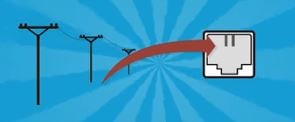 FXO stands for foreign exchange office. An FXO port is an interface that connects your Plain Old Telephone Service (POTS) line to a VoIP adapter.
It designates a telephone signaling interface that receives POTS (plain old telephone service). Um… ok. Let’s put it this way, FXO is a port that will connect a device to an outside telephone line. Think “O” for “Outside”. Picture an RJ11 wall jack that connects to a box in your basement which is connected to the line from your house to the nearest telephone pole on your street. Any RJ11 port on a device that is headed towards that wall jack is an FXO port. It connects your device to the “outside” world or your local area telephone “office”.
What is an FXO/FXS port used for?
These ports are used to allow you to connect your analog phones to a VoIP system. An FXS port helps you connect your analog fax machine to your VoIP phone system; an FXO port enables you to use analog telephone lines with your VoIP phone system.
An FXO/FXS VoIP Adapter and Gateway
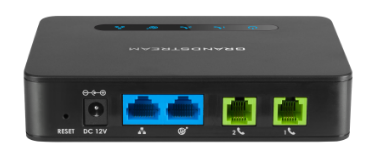 FXS and FXO ports are important when dealing with VoIP adapters and VoIP Gateways. The number of telephones, PBX systems or PSTN lines you are looking to connect to a VoIP adapter or gateway determines how many of each port you will need.
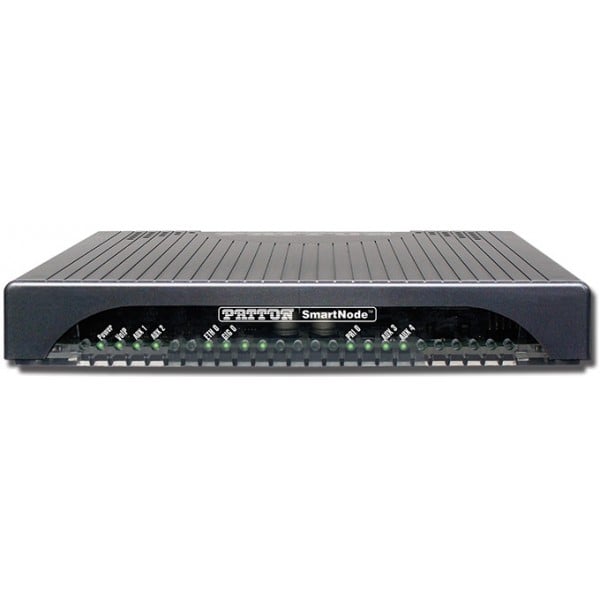 An FXS gateway is used to connect your traditional telephones and fax machines to a VoIP Phone system; an FXO gateway is used to connect your VoIP phone system to your PSTN lines.
VoIP Failover
In the event of failure, the most critical phone systems should have a failover feature so phone calls or faxes may continue during the downtime. You can still make telephone calls via the POTS line. Also, you can use the FXO port to make free local calls on your PSTN line.


17 Comments
thanks a lot. I’ve never really got these terms until this point. very clear. thanks.
Thank you very much, very helpful info.
FXO ports can help in dialling an analog phone line from a telephone system, like mine, Ozeki Phone System XE. I use this telephone system because it provides a reliable and fast data transfer between the analog phone and another phone.
I can recommend you a page with a video attached to it : ozekiphone.com/what-is-fxo-328.html . the page is about FXO ports and the video represents using FXO with Ozeki Phone System XE.
Hi all….
I’m trying to implement my own VoIP telephony system in my college. They already have analog intercom. Now i want my fetch my digital voip with that analog. I’ve implemented my digital VoIP by using asterisk server, and 3CX soft phone (Its working successfully in LAN). Can i complete this task. If yes means, what are the hardware i may required, and need some guide…
Thanks in advance…!
Awesome. Now I know what FXO and FXS means
Great to hear! If you want to learn more, you can also check out our free guides: https://www.voipsupply.com/voip-buyers-guides
Thank you!
Evy
So would you say if my router has FXS1 cable on the power supply I would need a router with FXS1 port? I’m thinking of changing my router at the moment.
Hello,
I have created a ticket for you. Our team will be in touch shortly. Meanwhile, you can visit our website to learn more about VoIP routers: https://www.voipsupply.com/networking/routers
Thank you,
Thank you very much, very helpful info.
If any one have a comparison sheet between Deskphone brands it will be great support if you can share with us
Hi Mohamed,
What phones/brands are you looking to compare? We do have a few comparison charts available you can check out. Here are a few:
Please let me know if you’d like to see something else.
Thank you,
Evy
Can somebody validate the facts stated at:
https://www.3cx.com/pbx/fxs-fxo/
All my life FXs is connected to a regular rj11 analog phone phone set.
FSO is port the where you plug your telephone service provider rj11
another analogy would be:
FXO = Internet Service Provider
FXS = LAN/Wifi
Correct me if I’m wrong please.
However, 3cx must have confused the world explaining FXS as the service provider port.
Hi Ismashkhy,
FXS sends signal FXO receives signal. FXO register as Gateway, FXS, register single FXS port as an extension.
FXS = CC machines, credit card machines, analog phone RJ9 GIVES OFF DIAL TONE
FXO = Phone line coming into the building POTS to a 66 punch down block.
Thank you,
Evy
Thank you very much, valuable information
You’re very welcome! Let us know if you have any questions!
An easy way to remember….
FXO O = Office… the port connects to the central office (CO)
FXS S = Station… the port connects to an extension or phone.
Hi Greg! That’s awesome! Thank you for sharing!